
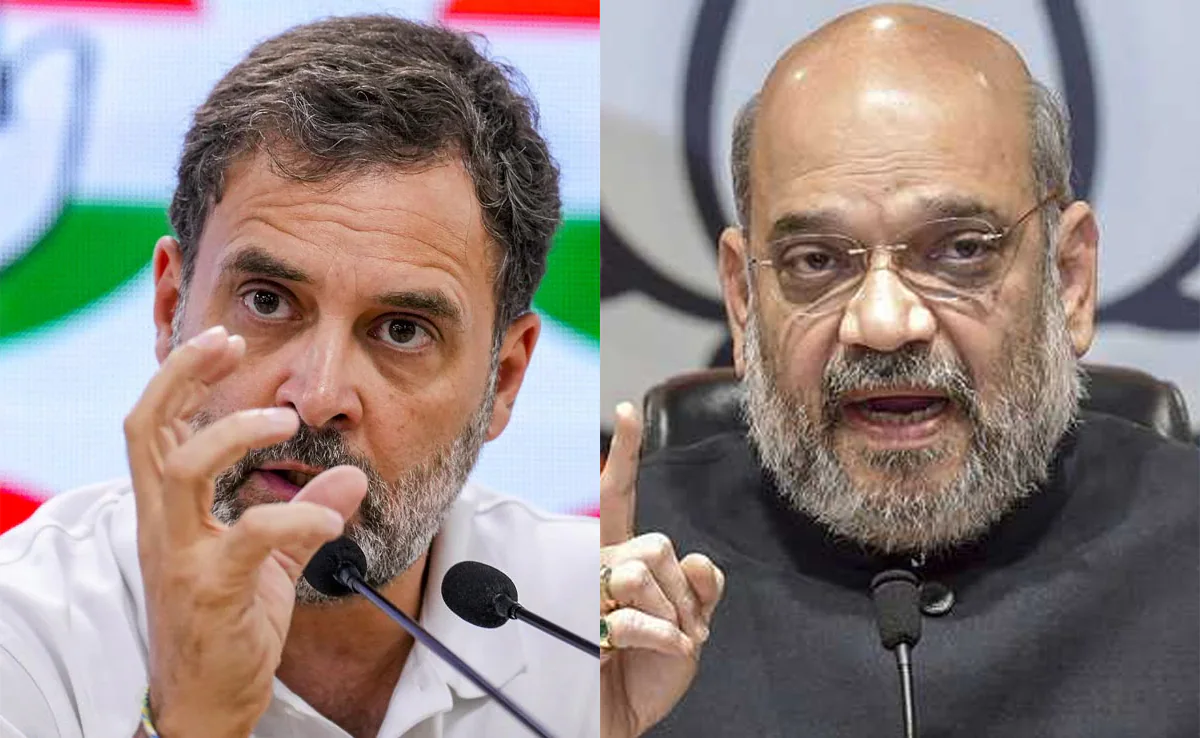
India’s political landscape witnessed a powerful moment recently as Rahul Gandhi and Amit Shah engaged in a heated exchange over voter rolls and the new SIR (Special Intensive Revision) process. What began as a routine parliamentary discussion quickly turned into a national debate on voter rights, transparency, and the future of the electoral system.
This confrontation is more than political drama — it touches the core of India’s democracy: how elections are conducted, how voters are verified, and how representation is protected.
Here’s a clear, structured breakdown of what happened, why it matters, and how it affects citizens across the country.
What Sparked the Clash?
The dispute began during discussions on electoral reform and voter-list accuracy. Rahul Gandhi raised concerns regarding alleged inconsistencies in voter rolls and suggested that the SIR process could open the door to manipulation or unfair removal of genuine voters.
Amit Shah firmly rejected these claims, stating that the SIR process is designed to enhance accuracy, reduce duplication, and strengthen electoral integrity. He emphasized that voter verification must follow strict rules and that accusations of political misuse were unfounded.
This disagreement escalated into direct exchanges, turning the debate into one of the most talked-about moments of the recent parliamentary session.
Understanding the SIR Process
The Special Intensive Revision (SIR) aims to:
- Update voter lists more frequently
- Identify duplicate or outdated entries
- Improve transparency in verification
- Ensure cleaner and more accurate electoral rolls
In theory, SIR strengthens democracy. But critics argue that poorly executed revisions may incorrectly remove eligible voters, particularly those in rural or migrant communities.
Rahul Gandhi’s Concerns
Rahul Gandhi highlighted issues such as:
- Possibility of genuine voters being left out
- Lack of grassroots awareness about the revision process
- Fears of political influence in electoral list management
- Reduced accessibility for citizens who struggle to complete online processes
His argument focused on ensuring every citizen’s right to vote remains protected, especially minority groups and first-time voters.
Amit Shah’s Counterpoint
Amit Shah responded with a strong defence of the government’s reforms, stating that:
- SIR is essential to maintain updated and accurate rolls
- Removal or addition of voters follows strict legal procedures
- Political motives are not involved in the verification process
- India’s electoral system is already one of the world’s most robust
He emphasized that cleanliness in electoral rolls prevents fraud and ensures each vote carries equal value.
Why This Debate Matters to Every Citizen
This is not just a clash between two political leaders.
It raises deeper questions:
1. How accurate are our voter lists?
Millions of Indians move cities, change addresses, or shift jobs. Voter lists must evolve with society.
2. Will new verification rules help or create confusion?
Smoother reforms strengthen democracy — but poorly implemented changes can create gaps.
3. How easily can citizens check or update their voter information?
A transparent system must be accessible to everyone, including rural and low-income communities.
4. Will this debate push India toward better electoral reforms?
Public debate often accelerates positive change.
The Bigger Picture
Every democracy needs healthy debate on its electoral process.
This clash shows that:
- Political leaders are actively questioning the system
- Transparency is becoming a key expectation
- Citizens are more aware of their voting rights
- Electoral reforms are receiving national attention
Regardless of political differences, discussions like these help strengthen India’s democratic foundation.
What Citizens Should Know Right Now
- Voter lists are undergoing increased revision cycles
- Citizens should recheck their voter information, especially if they recently moved
- Awareness campaigns may increase in the coming months
- Any reforms will take time to implement fully
Being proactive ensures no eligible voter is left out.
Conclusion
The Rahul Gandhi vs Amit Shah debate is a reminder that electoral reform is both necessary and sensitive. Voter lists are not just administrative documents — they represent the voice, identity, and democratic right of every Indian.
Healthy political debates, public scrutiny, and transparent processes can help India move toward a stronger, more reliable, and more inclusive electoral system. As citizens, staying informed and engaged is the best way to protect the power of our vote.