

Introduction
India has achieved a major milestone in public service reforms with nationwide digitisation of ration cards and near-total Aadhaar seeding. This development marks a big step toward transparent, efficient delivery of subsidised food grains through the Public Distribution System (PDS).
In this blog, we’ll break down what the digitisation drive is, why it matters, where the government stands, and what it means for beneficiaries across the country.
What Is Ration Card Digitisation?
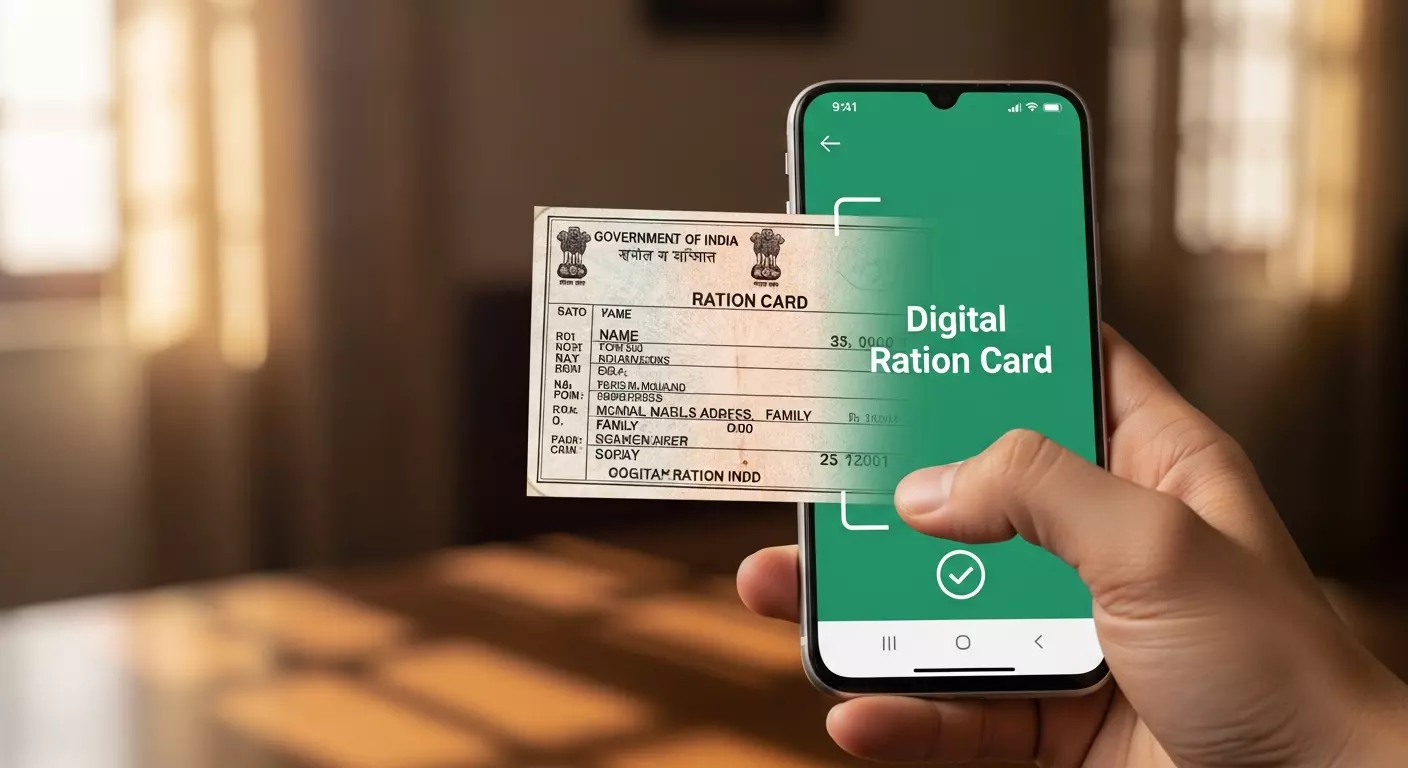
Ration card digitisation refers to the process of converting all paper-based ration cards into a fully digital format within the government’s PDS database.
This includes:
✔ Electronic records for every household
✔ Linking beneficiary data to Aadhaar
✔ Online management of ration quotas and entitlements
Digitisation enables accurate record-keeping and helps eliminate fake, duplicate, or inactive cards.
Aadhaar Linking: Why It’s Important
Aadhaar seeding means linking each ration card with the Aadhaar number of beneficiaries. This ensures:
- Authentic beneficiaries get food subsidies
- Reduced fraud and duplication
- Faster claim processing at fair price shops via biometric authentication
Data released by government sources shows over 99.8% of ration cards have been Aadhaar-seeded — a near-total success. Some regions may still be in final stages of linking, but the coverage is exceptionally high.
How This Benefits Citizens
Here’s how near-complete digitisation and Aadhaar linking impacts everyday life:
✅ Better Targeting of Subsidies
Only genuine beneficiaries receive foodgrain entitlements.
✅ Reduced Leakages
Digitised systems cut down on corruption and diversion within the PDS chain.
✅ Faster & Transparent Services
Beneficiaries can check entitlements online, reducing dependency on manual verification.
✅ Mobile & Online Access
Many states now provide digital ration card access via apps or portals, making it easier for users to update details.
Challenges Still Remaining
While the government has achieved near-universal coverage, a few challenges remain:
🔹 Last-mile Aadhaar linkage in some districts
🔹 Awareness gaps in rural areas
🔹 Digital literacy issues among elderly beneficiaries
Efforts are ongoing through local outreach programs and help desks at PDS centres to close these gaps.
State-Wise Implementation Snapshot
Most states and union territories have:
🔹 Completed full digitisation of ration cards
🔹 Achieved very high Aadhaar seeding percentages
🔹 Upgraded fair price shops with digital PoS devices
The central government continues monitoring 100% implementation and supports states with tech and policy guidance.
What’s Next for India’s PDS
Going forward, the focus will be on:
📌 Ensuring real-time verification at the point of delivery
📌 Integrating other welfare schemes with digital IDs
📌 Providing online access and grievance redressal
This is part of India’s larger vision of a paperless, transparent, and citizen-centric welfare delivery system.
Conclusion
The near-complete digitisation of ration cards and Aadhaar integration across India is a transformative leap for the PDS. It boosts transparency, enhances delivery efficiency, and safeguards food security for millions.