

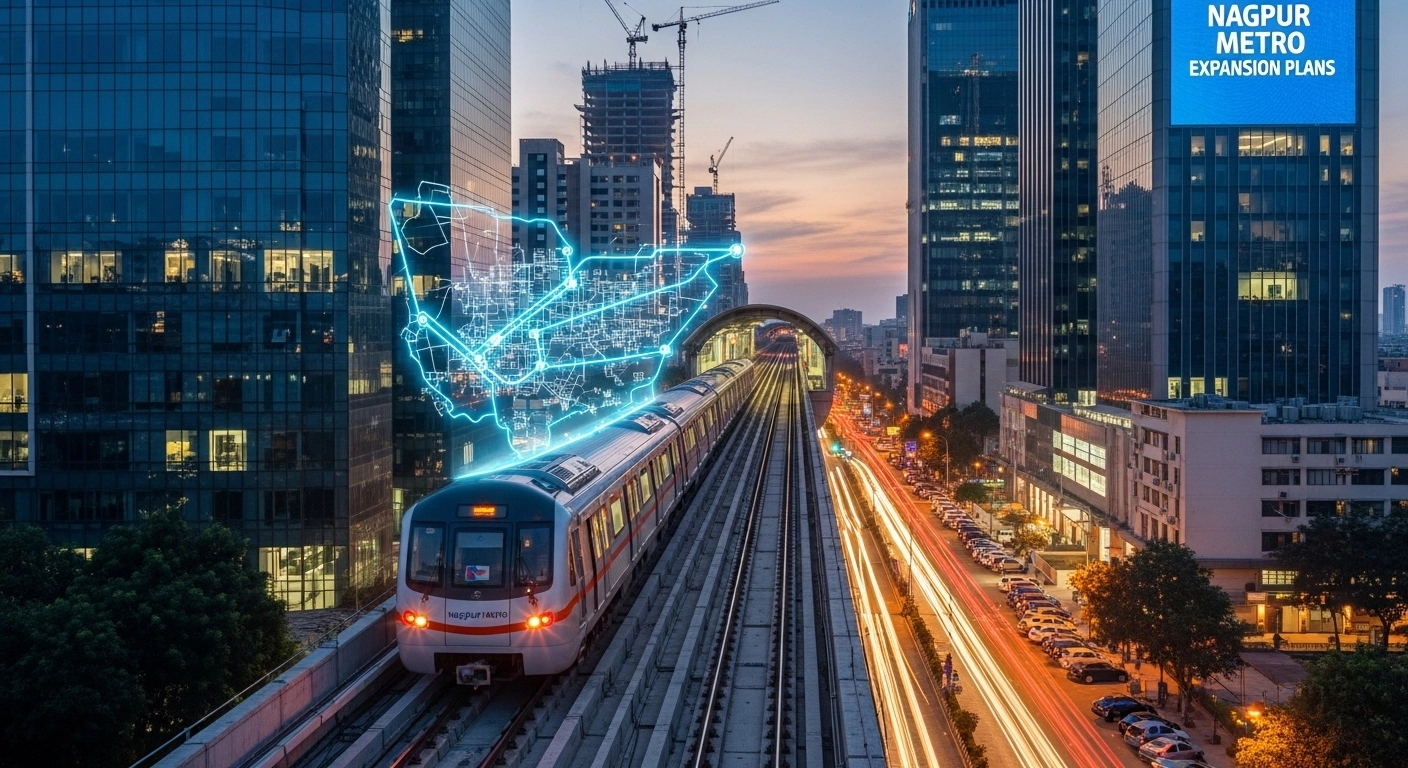
On its 12th foundation day, Nagpur Metro marked a significant milestone by outlining its ambitious Phase II development and proposed Phase III expansion plans. However, while expansion discussions dominate the roadmap, ridership levels continue to remain below initial projections — raising important questions about connectivity, last-mile access, and urban mobility patterns.
Operated by MahaMetro, the Nagpur Metro was envisioned as a transformative urban transport system for central India. As the project enters its next phase of growth, balancing expansion with operational sustainability remains a key challenge.
12 Years of Nagpur Metro: A Milestone Moment
Celebrating its foundation day, MahaMetro highlighted:
- Infrastructure progress since inception
- Operational achievements
- Future corridor expansion plans
- Technology upgrades and sustainability goals
The event underscored the long-term vision of making Nagpur a modern, transit-oriented city. Yet, data suggests that the metro system is still working toward achieving optimal passenger volumes.
Phase II Expansion: What’s Planned?
Phase II of the Nagpur Metro aims to extend connectivity to emerging residential and commercial hubs. The expansion is expected to:
- Cover additional suburban areas
- Improve interchanges with rail and bus services
- Reduce travel time across growing city zones
- Strengthen east-west and north-south corridors
These expansions are intended to increase accessibility and attract more daily commuters to shift from private vehicles to public transport.
Proposed Phase III: Long-Term Vision
Beyond Phase II, MahaMetro has proposed Phase III extensions to further expand the network. These proposals are focused on:
- Expanding reach to peri-urban areas
- Enhancing connectivity to industrial zones
- Supporting future population growth
- Integrating multimodal transport systems
If approved, Phase III could significantly reshape Nagpur’s transportation landscape in the coming decade.
The Ridership Challenge
Despite infrastructure development, metro ridership has remained below initial projections. Several factors contribute to this gap:
1. Last-Mile Connectivity Issues
Limited feeder services and insufficient integration with local transport systems reduce convenience for commuters.
2. Urban Density Patterns
Certain metro corridors pass through areas with relatively lower population density, affecting passenger volume.
3. Private Vehicle Preference
A significant portion of Nagpur’s population continues to rely on two-wheelers and personal vehicles due to flexibility and familiarity.
4. Work-from-Home Trends
Post-pandemic work culture shifts have also influenced commuting patterns, impacting daily ridership.
Financial and Operational Sustainability
Metro systems require high ridership to maintain financial viability. Lower-than-expected passenger numbers can impact:
- Farebox revenue
- Operational efficiency
- Expansion funding strategies
- Long-term profitability models
However, infrastructure projects of this scale are often evaluated over decades rather than short-term returns.
Connectivity: The Key to Growth
Experts suggest that improving integration could significantly boost ridership. Possible solutions include:
- Strengthening feeder bus networks
- Developing park-and-ride facilities
- Promoting transit-oriented development (TOD)
- Introducing digital ticketing and seamless mobility solutions
Improved multimodal integration can enhance convenience and make metro travel more attractive.
Economic and Urban Impact
Even with moderate ridership, Nagpur Metro has contributed to:
- Increased property development near stations
- Improved city branding and investor perception
- Reduction in traffic congestion in certain corridors
- Lower carbon emissions compared to road transport
Infrastructure investments often generate indirect economic benefits that extend beyond passenger numbers.
The Road Ahead
As Nagpur Metro moves into its next expansion phase, balancing ambition with ground realities will be crucial. Phase II and Phase III plans reflect long-term urban planning goals, but ridership optimization must remain central to policy discussions.
The next few years will determine whether enhanced connectivity, better planning, and behavioral shifts can bridge the gap between projections and actual usage.
Conclusion
Nagpur Metro’s 12th foundation day celebrations highlight both achievement and opportunity. While expansion plans under Phase II and proposed Phase III signal growth, the challenge of boosting ridership and improving connectivity remains critical.