

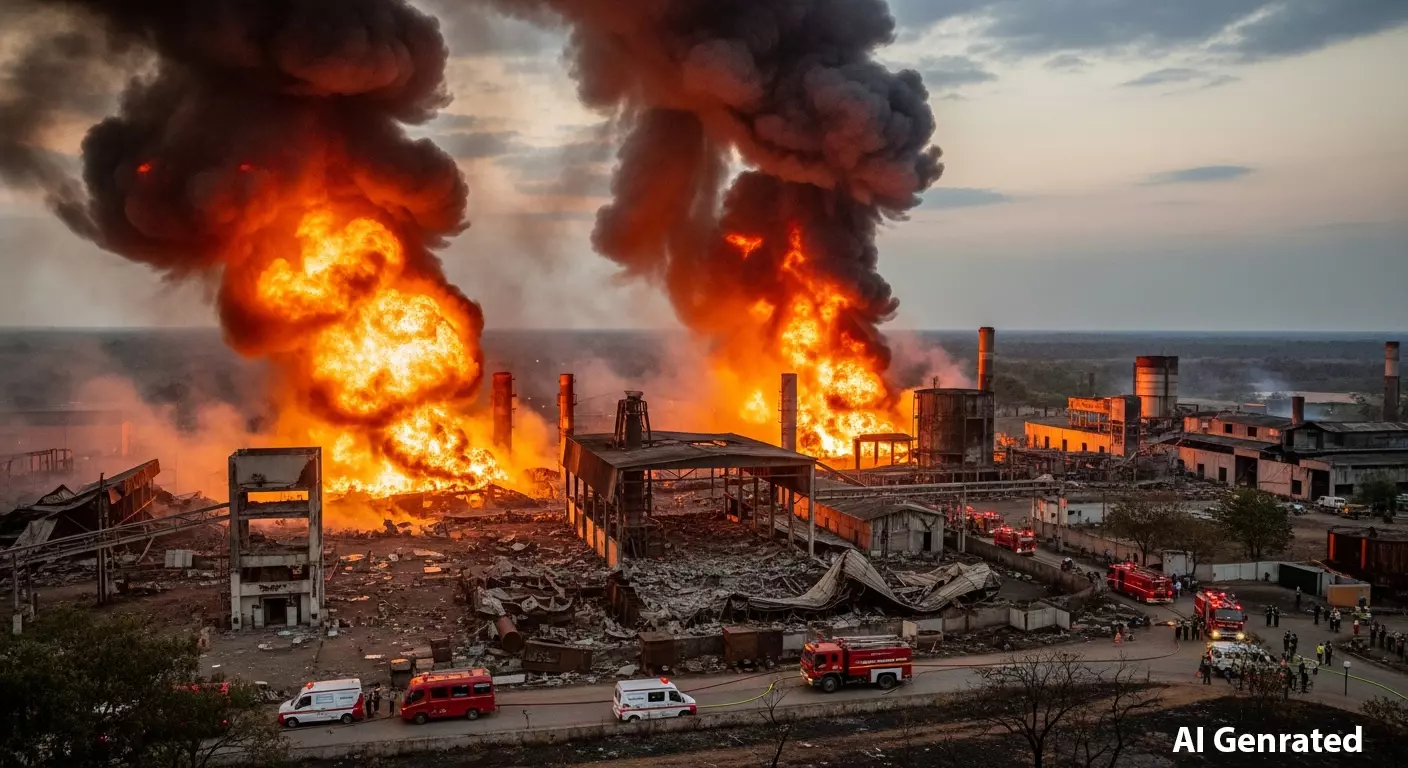
A devastating explosion at SBL Energy Limited in Raulgaon village near Nagpur has claimed at least 18 lives and injured 24 workers, marking one of the deadliest industrial accidents in the region in recent years.
The powerful blast reportedly occurred during early morning operations in a detonator-handling section of the explosives manufacturing unit. The impact was so severe that sections of the structure collapsed instantly, trapping workers under debris and igniting a massive fire.
Local residents described hearing a loud explosion followed by thick smoke rising from the factory premises. Emergency services were alerted immediately.
Rescue Operations and Emergency Response
Within minutes, fire brigade teams, police personnel, and disaster response units rushed to the site. Rescue workers battled intense heat and unstable debris to pull out trapped workers.
Several injured workers suffered severe burn injuries and were transported to hospitals in Nagpur city for advanced treatment. Authorities confirmed that many bodies were charred beyond recognition, requiring forensic and DNA identification procedures.
The rescue operation continued for several hours to ensure no one remained trapped inside the damaged unit.
Casualties and Human Impact
- 18 workers confirmed dead
- 24 workers injured, some in critical condition
- Several victims were daily-wage earners
- Multiple families lost their sole breadwinners
The tragedy has left Raulgaon and surrounding villages in deep shock. Many of the deceased belonged to economically vulnerable households, intensifying the humanitarian impact of the disaster.
Arrest of Directors and Legal Action
In a major legal development, police arrested nine directors of SBL Energy Limited. Cases have been registered under culpable homicide provisions of criminal law, indicating serious allegations of negligence.
Investigators are examining:
- Compliance with explosives handling regulations
- Safety protocols during detonator operations
- Storage capacity and permitted limits
- Availability of trained safety officers
- Past inspection reports and audit records
Authorities have indicated that accountability will extend beyond operational staff to top-level management if negligence is established.
Preliminary Cause: Suspected Safety Lapses
While forensic investigation is ongoing, early assessments suggest possible safety violations.
Explosives manufacturing is a high-risk industry where even minor lapses can trigger catastrophic chain reactions. Handling detonators requires strict environmental controls, temperature regulation, static-free environments, and precise operational discipline.
Sources indicate investigators are probing:
- Whether explosive material exceeded permitted handling limits
- Whether safety monitoring systems were functional
- Whether adequate supervision was present during early shift operations
- Whether prior warnings or compliance notices were ignored
The scale of destruction suggests a chain reaction event rather than a minor isolated blast.
Government Response and Compensation
Prime Minister Narendra Modi expressed grief over the tragedy and announced ex-gratia financial assistance for families of the deceased and the injured.
Maharashtra Chief Minister Devendra Fadnavis ordered a high-level inquiry and announced state compensation packages for victims’ families.
Compensation measures include:
- Financial assistance to families of the deceased
- Support for injured workers’ medical treatment
- Possible additional company-level liability compensation
The state government has also directed a review of safety standards at explosives and hazardous manufacturing units across Maharashtra.
Industrial Safety Concerns in Maharashtra
The Nagpur Rural explosion has once again raised serious questions about industrial safety enforcement in high-risk sectors.
Experts highlight recurring systemic concerns:
- Irregular safety audits
- Limited surprise inspections
- Gaps in worker training
- Outdated monitoring systems
- Pressure to increase production at the cost of compliance
Explosives factories require adherence to stringent guidelines under national industrial safety regulations. Any compromise can result in large-scale loss of life, as seen in this incident.
Impact on Nagpur Rural Economy
Beyond the immediate human loss, the explosion may impact:
- Employment opportunities in the region
- Confidence in local industrial units
- Regulatory scrutiny on similar factories
- Investment climate in high-risk sectors
Families of victims are demanding strict punishment for those responsible and stronger preventive safeguards.
What Happens Next?
The investigation is expected to focus on:
- Technical forensic analysis of the blast origin
- Examination of company documentation
- Regulatory compliance history
- Accountability of inspection authorities
If culpable negligence is proven, severe legal penalties could follow for company management.
The tragedy at Raulgaon serves as a stark reminder that industrial growth without uncompromising safety standards can lead to irreversible consequences.