

Introduction
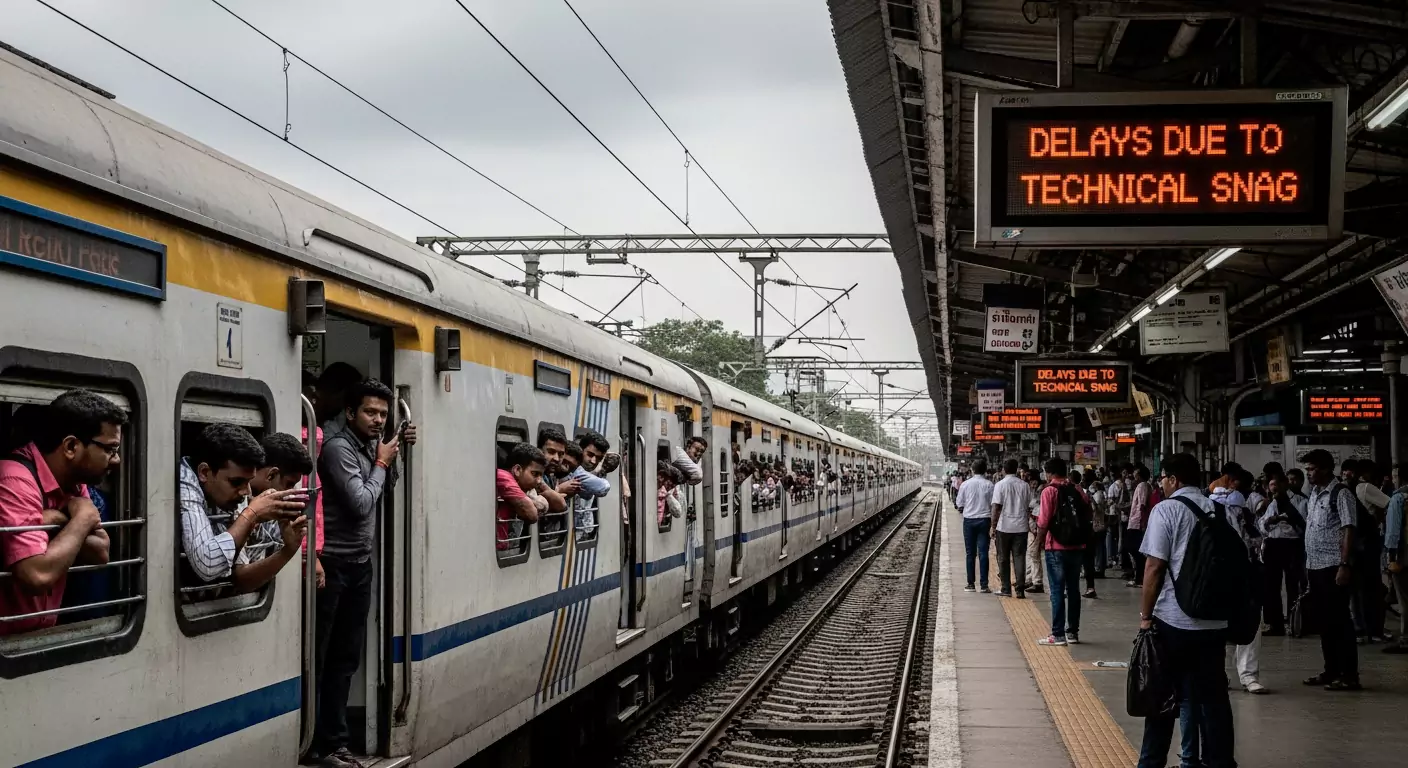
Mumbai’s lifeline, the suburban railway network, witnessed disruptions after a technical snag affected local train services across key routes. The incident caused significant delays during peak hours, impacting thousands of daily commuters who depend on the city’s railway system.
The disruption highlights the operational sensitivity of one of the world’s busiest suburban rail networks.
About Mumbai’s Suburban Railway Network
Operated primarily by Central Railway and Western Railway, Mumbai’s local train system carries millions of passengers daily.
Key Corridors Affected:
- Central Line
- Western Line
- Harbour Line
Even minor technical faults can trigger cascading delays across multiple routes due to the dense scheduling of trains.
Nature of the Technical Snag
While detailed technical assessment is ongoing, such disruptions typically occur due to:
- Overhead wire issues
- Signal failure
- Track circuit malfunction
- Power supply interruption
- Rake (train set) breakdown
In a high-frequency system like Mumbai’s, any disruption at a single junction can impact services across several stations.
Impact on Commuters
🚉 Peak Hour Chaos
Passengers reported overcrowded platforms and extended waiting times.
⏱ Train Delays
Services were delayed by several minutes, with some trains running behind schedule.
🏢 Work & Business Disruption
Office-goers, students, and daily wage workers faced inconvenience due to late arrivals.
Mumbai locals transport over 7–8 million passengers daily, making punctuality critical for the city’s economic rhythm.
Railway Response & Restoration
Railway authorities typically deploy:
- Technical teams to resolve the snag
- Alternate platform management
- Announcements and passenger advisories
- Rerouting of select services
Efforts are usually made to restore normalcy at the earliest to prevent further operational backlog.
Structural Challenges in Mumbai’s Rail Network
Despite modernization efforts, several challenges persist:
🔧 Aging Infrastructure
Parts of the railway network operate on decades-old systems.
📈 Increasing Passenger Load
Rapid urban growth has significantly increased commuter density.
🌧 Monsoon Sensitivity
Heavy rainfall often adds to technical vulnerabilities.
Ongoing projects aim to upgrade signaling systems and expand rail corridors to enhance reliability.
Long-Term Solutions & Modernization
Authorities are working toward:
- Advanced automatic signaling
- Dedicated suburban corridors
- Increased frequency through new train sets
- Infrastructure digitization and predictive maintenance
Such upgrades are crucial for building resilience in Mumbai’s transit backbone.
Conclusion
The temporary disruption in Mumbai local train services due to a technical snag once again underlines the immense pressure on the city’s suburban rail network. While railway teams act swiftly to restore services, long-term infrastructure modernization remains essential to ensure uninterrupted operations.