
Overview
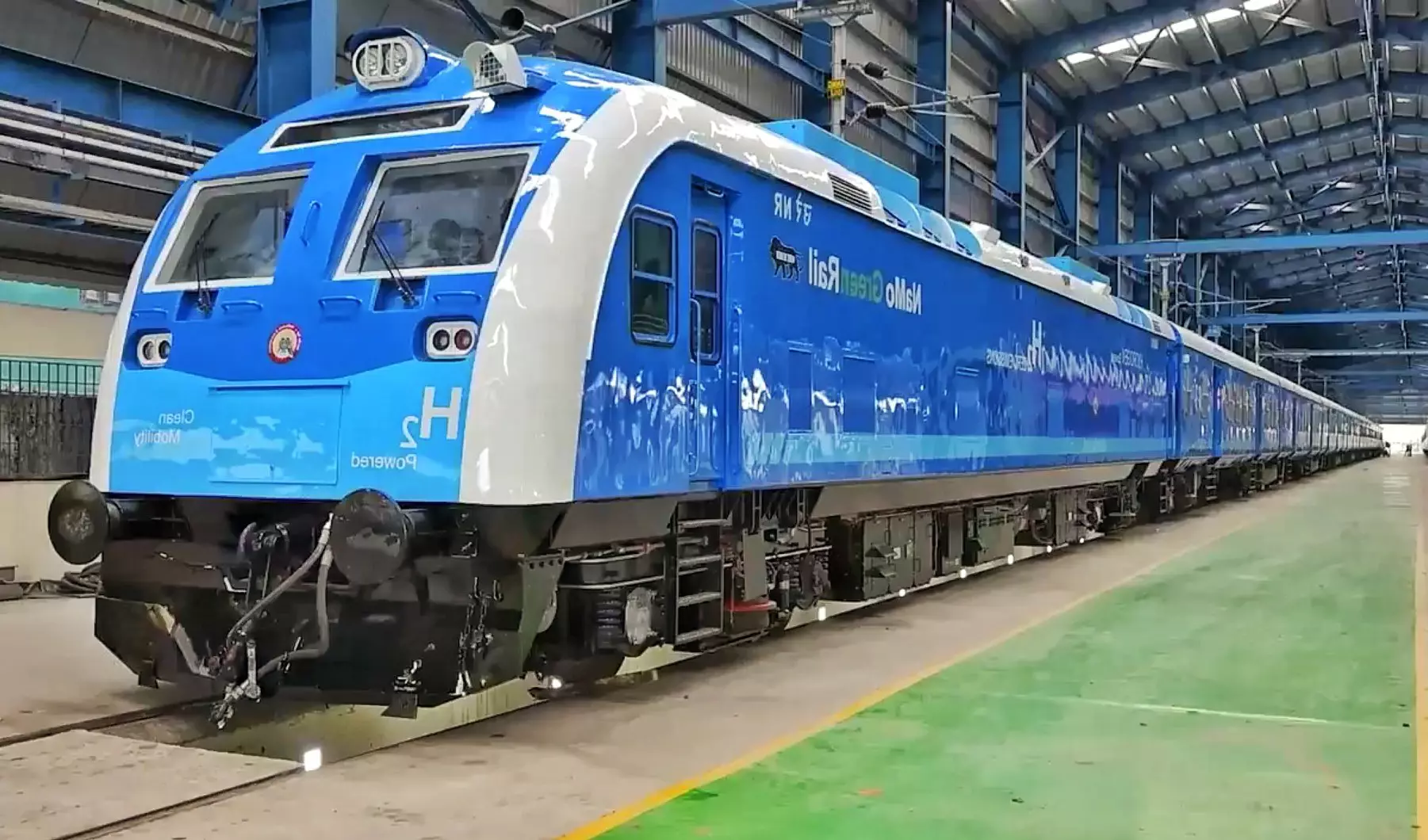
India is set to achieve a major milestone in sustainable transportation with the commissioning of its first hydrogen-powered train in Haryana, supported by a 3-tonne green hydrogen production plant. This initiative marks a significant move towards carbon-neutral rail operations and aligns with India’s long-term climate and clean energy goals.
What Is a Hydrogen Train?
A hydrogen train runs on hydrogen fuel cells, which generate electricity through a chemical reaction between hydrogen and oxygen. The only by-products of this process are water vapor and heat, making it a zero-emission alternative to diesel locomotives.
Unlike conventional electric trains, hydrogen trains do not require continuous overhead electrification, making them ideal for routes where electrification is difficult or costly.
Haryana Project: Key Details
- Location: Haryana
- Hydrogen Source: Green hydrogen produced using renewable energy
- Plant Capacity: 3 tonnes of green hydrogen
- Train Type: Hydrogen Fuel Cell-powered passenger train
- Status: Near commissioning
- Emission Level: Zero direct carbon emissions
The green hydrogen plant will supply fuel to the train, ensuring the entire operation remains environmentally sustainable.
Why This Project Is Important for India
1. Boost to Green Energy Transition
The project supports India’s National Green Hydrogen Mission, which aims to make India a global hub for green hydrogen production and usage.
2. Reduction in Diesel Dependency
Indian Railways is one of the largest diesel consumers in the country. Hydrogen trains can significantly reduce fuel imports and operational emissions on non-electrified routes.
3. Cleaner Public Transport
By replacing diesel-powered trains, hydrogen trains will help lower air pollution, especially in semi-urban and rural regions.
4. Technological Leadership
With this project, India joins a select group of countries experimenting with hydrogen rail technology, showcasing indigenous innovation and engineering capability.
How the 3-Tonne Green Hydrogen Plant Works
The hydrogen plant produces green hydrogen through electrolysis, using electricity generated from renewable sources such as solar or wind energy. This ensures the hydrogen used in the train is completely carbon-free, from production to consumption.
The hydrogen is stored safely and supplied to the train’s fuel cells, which convert it into electrical energy for propulsion.
Challenges and Future Scope
Challenges
- High initial cost of hydrogen infrastructure
- Storage and transportation of hydrogen
- Scaling the technology for long-distance and freight routes
Future Potential
- Expansion to other non-electrified railway lines
- Use in freight trains and shunting locomotives
- Integration with solar and wind-powered hydrogen hubs
If successful, this pilot project could lead to nationwide adoption of hydrogen trains over the next decade.
Conclusion
India’s first hydrogen train in Haryana represents a transformational leap in railway sustainability. Powered by a 3-tonne green hydrogen plant, the project demonstrates how clean energy can be integrated into large-scale public transport systems. As commissioning approaches, this initiative could redefine the future of Indian Railways and set a global example in zero-emission mobility.