
India–EU FTA Talks: What Happened in Brussels
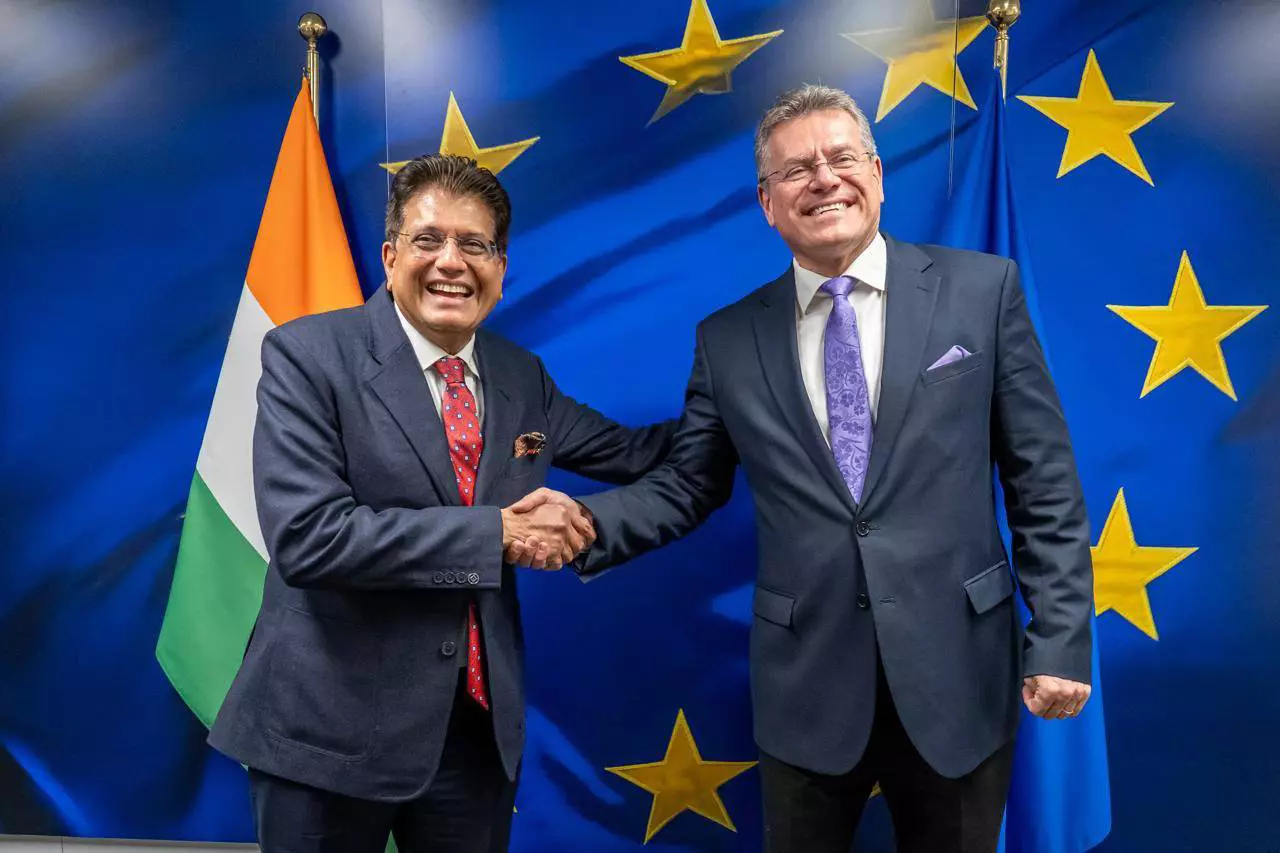
Union Minister of Commerce and Industry Piyush Goyal met European Union Trade and Economic Security Commissioner Maroš Šefčovič in Brussels to advance negotiations on the long-pending India–European Union Free Trade Agreement (FTA).
Following the meeting, Goyal stated that discussions covered key aspects of the proposed trade pact, with both sides reaffirming their commitment to fair trade practices, protection of farmers and MSMEs, and deeper integration of India into global supply chains.
The meeting is seen as a crucial step in accelerating negotiations that have gained renewed momentum after years of stalled talks.
What Is the India–EU Free Trade Agreement?
The India–EU FTA aims to create a comprehensive trade framework covering:
- Goods and services trade
- Investment protection
- Intellectual property rights
- Digital trade and sustainability
- Market access and tariff reductions
The European Union is one of India’s largest trading partners, making the agreement strategically important for both economies.
Key Issues Discussed During the Meeting
1. Fair Trade and Balanced Market Access
Both sides emphasized the need for equitable trade rules, ensuring that domestic industries are not adversely affected by sudden market openings.
2. Protection of Farmers and MSMEs
India highlighted the importance of safeguarding:
- Farmers, particularly in sensitive agricultural sectors
- Micro, Small, and Medium Enterprises (MSMEs), which form the backbone of India’s economy
The focus remains on preventing unfair competition while enabling growth opportunities.
3. Strengthening Global Supply Chains
The talks underscored India’s growing role as a reliable manufacturing and supply chain hub, especially as global companies seek alternatives to concentrated production regions.
Why This Meeting Is Significant
Renewed Momentum
FTA negotiations between India and the EU had faced delays due to differences over tariffs, environmental standards, and regulatory norms. This high-level meeting signals political will on both sides to bridge gaps.
Strategic and Economic Impact
- For India: Increased exports, foreign investment, and job creation
- For the EU: Access to one of the world’s fastest-growing major economies
Geopolitical Context
At a time of shifting global trade alliances, the India–EU FTA is also viewed as a strategic partnership, reducing over-dependence on limited markets.
Challenges Ahead
Despite progress, several challenges remain:
- Disagreements over agricultural market access
- Differences in labour and environmental standards
- Data protection and digital trade regulations
Resolving these issues will be critical for finalising a mutually beneficial agreement.
What Comes Next?
Negotiators from both sides are expected to:
- Continue technical-level discussions
- Narrow differences on sensitive sectors
- Work toward a comprehensive and balanced trade pact
If talks progress as planned, the India–EU FTA could become one of the most significant trade agreements India has signed in recent years.
Conclusion
Union Minister Piyush Goyal’s meeting with EU Trade Commissioner Maroš Šefčovič marks an important step forward in India–EU trade relations. By focusing on fair trade, farmer and MSME protection, and global supply chain integration, both sides have signalled a strong intent to move negotiations toward a successful conclusion.
The outcome of these talks could reshape India’s trade landscape and strengthen its economic ties with Europe for decades to come.