
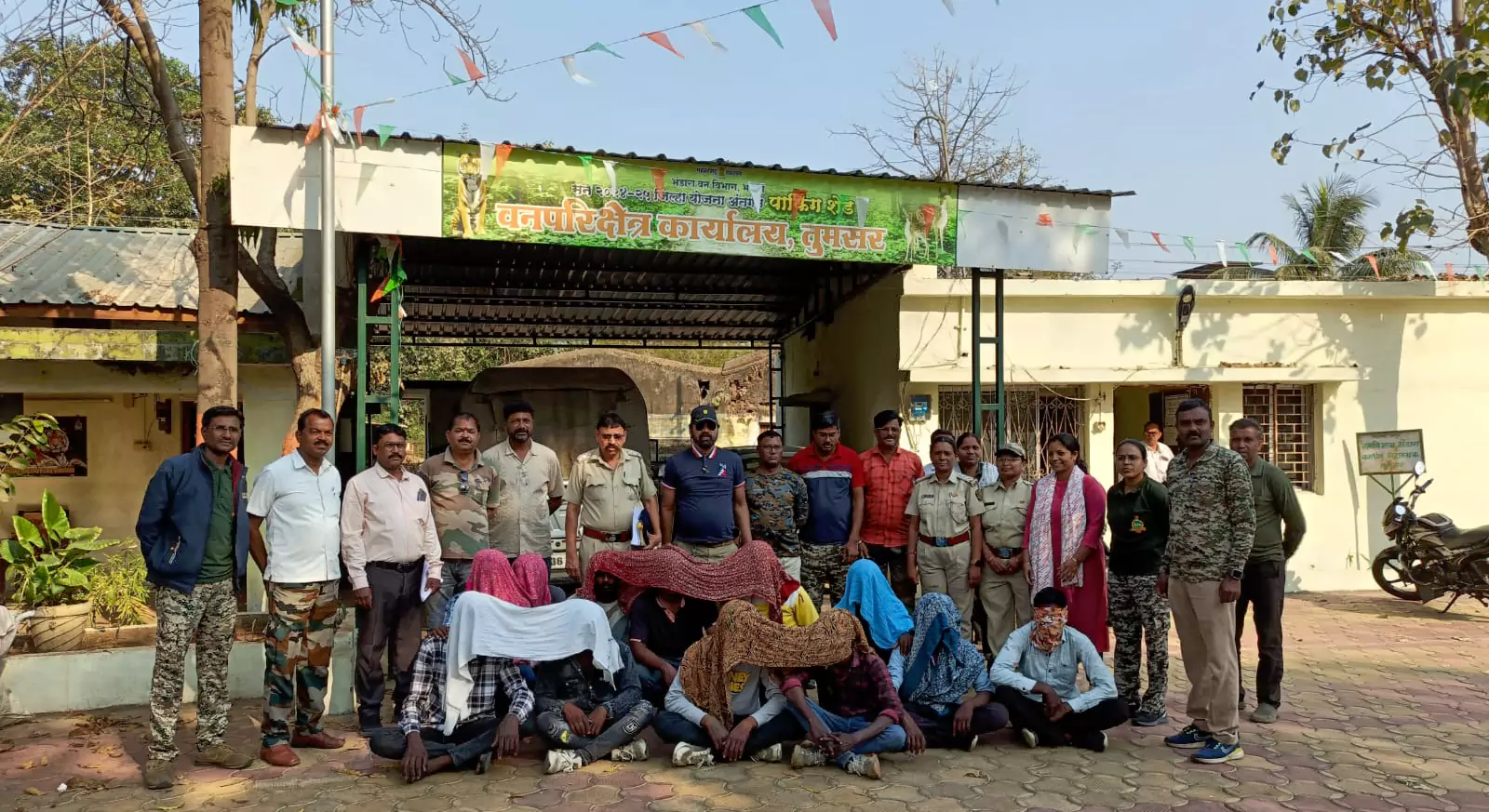
A recent enforcement action by the Tumsar Forest Department in Bhandara district has brought attention to illegal wildlife activities in the region. During routine patrolling in the Zanzheria Beat area, forest officials apprehended 12 accused individuals involved in wild boar poaching. Weapons, nets, and vehicles used in the operation were seized.
This incident is not just a criminal case—it highlights broader issues related to wildlife protection, rural economics, and ecological balance.
1️⃣ Background: Why Wild Boar Poaching Occurs
Wild boars are commonly found across forest belts in Maharashtra, including Vidarbha. Illegal hunting typically occurs due to:
- Demand for wild meat in local black markets
- Crop damage caused by wild boars, leading to retaliatory killing
- Organized poaching groups targeting forest areas
- Weak surveillance in remote forest zones
In agricultural regions, farmers often report crop losses due to wild boars. However, illegal hunting is not a legally acceptable solution.
2️⃣ Legal Framework
Wildlife protection in India is governed by the Wildlife Protection Act, 1972.
Under this law:
- Hunting protected species is a punishable offense
- Possession of traps, weapons, or animal carcasses linked to poaching can lead to arrest
- Vehicles and equipment used in wildlife crimes can be confiscated
- Offenders may face imprisonment and financial penalties
Depending on classification and state notifications, wild boar hunting without official authorization is illegal.
3️⃣ Significance of the Zanzheria Beat Operation
The seizure of:
- Hunting weapons
- Capture nets
- Transport vehicles
- Multiple accused individuals
suggests a coordinated and possibly organized attempt rather than isolated subsistence hunting.
Forest patrol detection during active movement indicates increased vigilance by the department.
4️⃣ Ecological Impact of Wild Boar Hunting
Wild boars play an important role in forest ecosystems:
- They help in seed dispersal by disturbing soil layers
- They contribute to nutrient cycling
- They are part of the food chain for larger predators
Unregulated hunting can:
- Disrupt ecological balance
- Affect predator populations
- Increase long-term human-wildlife conflict
5️⃣ Social and Economic Dimensions
🔹 Crop Damage & Farmer Frustration
Wild boars are known to damage crops, creating tension between farmers and wildlife authorities. However, legal solutions include:
- Government compensation schemes
- Protective fencing
- Controlled wildlife management programs
Illegal hunting often worsens legal consequences for individuals involved.
🔹 Rural Economic Pressure
In some cases, poaching is linked to economic hardship or illegal meat trade networks.
6️⃣ Challenges for Forest Authorities
Forest departments often face:
- Large forest coverage areas
- Limited manpower
- Night-time surveillance difficulties
- Growing organized wildlife trade networks
Despite these challenges, the Tumsar Forest Department’s action demonstrates active monitoring and enforcement.
7️⃣ Preventive Measures Going Forward
To prevent similar incidents:
- Strengthening forest patrol networks
- Use of drone and surveillance technology
- Community awareness programs
- Faster compensation mechanisms for crop damage
- Intelligence gathering against organized wildlife crime groups
Conclusion
The arrest of 12 individuals in Bhandara’s Zanzheria Beat is a significant step in combating wildlife crime. However, sustainable solutions require a balance between wildlife conservation, farmer welfare, and strict law enforcement.
Wildlife protection is not only a legal issue—it is essential for maintaining ecological stability and long-term environmental health.