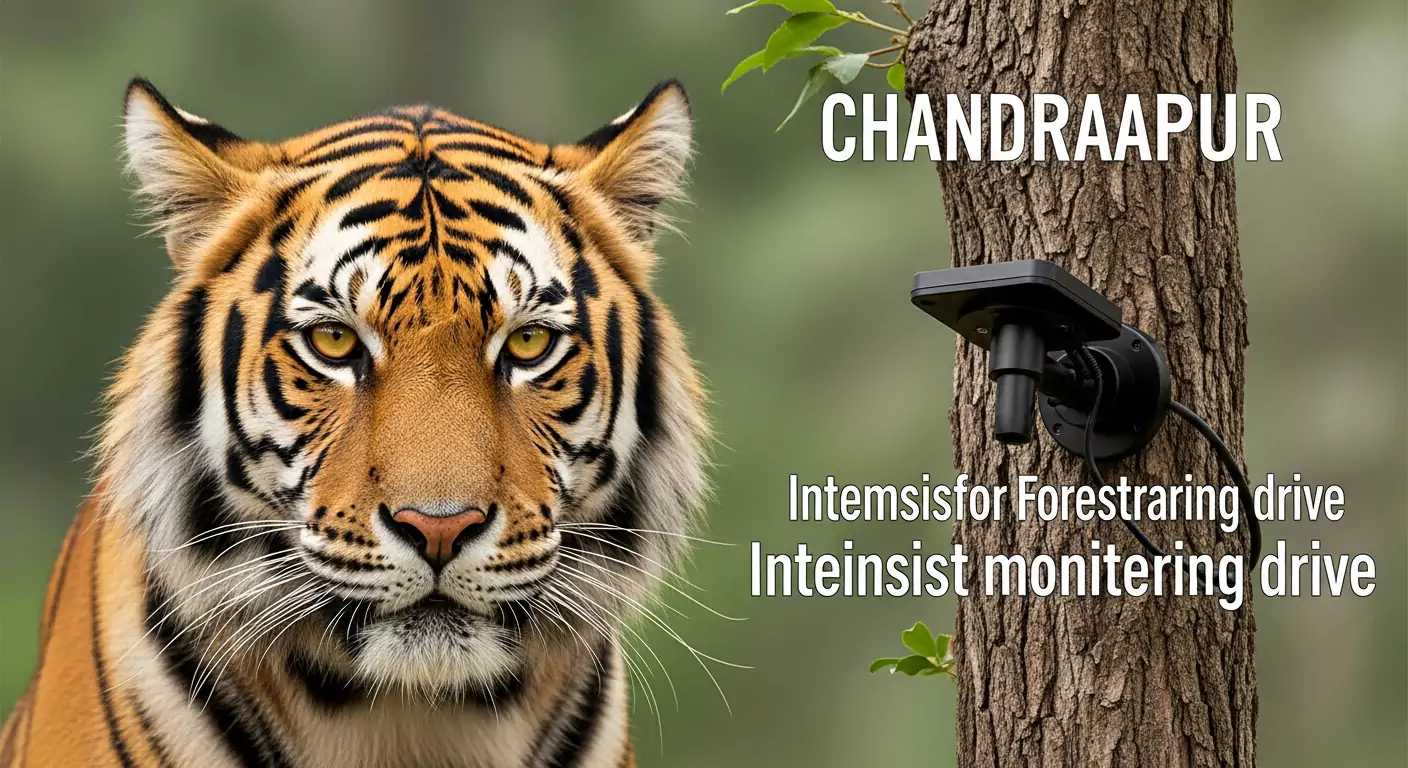


A shocking incident has created fear across the farming community in Injevary village, Armori taluka of Gadchiroli district. Kunda Khushal Meshram, a resident of the village, was killed in a tiger attack today around 4 PM. The tragic event occurred at a time when farmers are deeply engaged in paddy harvesting and threshing, making the situation even more alarming.
This incident has once again highlighted the growing human–wildlife conflict in the region — especially in forest-adjacent villages of Gadchiroli, where tiger movement has increased steadily in recent years.
🐅 What Happened in Injevary?
According to initial information, the victim had gone to her farm area when the tiger attacked suddenly. Other villagers later discovered the tragic scene, after which panic spread across the locality.
The forest department and police teams reached the spot for investigation and further action.
Villagers are now demanding immediate measures to prevent further attacks.
🌾 Why the Incident Is More Serious During Harvest Season
This attack happened at a crucial time — the paddy harvest season, when farmers spend long hours in the fields. This increases their exposure to wildlife.
Key reasons this period becomes high-risk:
- Dense paddy fields give cover for tigers to hide
- Increased human movement in farms
- Crop activity continues from morning till sunset
- Wildlife passes through the area in search of prey and water
This combination often leads to dangerous encounters.
⚠️ Rising Human–Wildlife Conflict in Gadchiroli
Forest-fringe villages in Gadchiroli have reported increasing tiger movement in the past few years.
Reasons include:
1️⃣ Expansion of tiger territories
Tigers are spreading out from core forest zones into buffer and village borders.
2️⃣ Declining prey near forest edges
When prey animals move deeper into the forest, tigers come outward.
3️⃣ Human encroachment into wildlife corridors
Fields, grazing routes, and houses are now close to tiger pathways.
4️⃣ Lack of timely warning systems
Many villages still don’t have SMS alerts, sirens, or rapid-response teams.
The incident in Injevary is another painful reminder of this ongoing challenge.
👥 Impact on Farmers & Local Community
The tragedy has created deep fear and uncertainty among villagers.
Immediate effects:
- Farmers are hesitant to go to fields alone
- Paddy harvesting and mashing activities may slow down
- Women and elderly farmers feel unsafe
- Livestock grazing has been restricted
- Daily-wage laborers working in farms are demanding protection
For a region heavily dependent on agriculture, this fear can affect both livelihood and productivity.
🌳 What Can Prevent Future Incidents?
Experts suggest several important measures to reduce such conflicts:
✔ Strengthen tiger monitoring
Camera traps, night patrols, and frequent tracking.
✔ Warning systems for villages
Announcements, mobile alerts, and forest-department coordination.
✔ Create safe human routes
Clear pathways for farmers and ensure activity zones are monitored.
✔ Remove tall bushes near farm boundaries
This reduces hiding spots for wild animals.
✔ Awareness sessions
Training farmers on safe movement, especially during early morning and evening hours.
✔ Rapid Response Teams
To act immediately after sightings and control panic.
Only sustained efforts can help avoid such tragedies.
🕊 A Tragic Loss & A Wake-Up Call for the Region
The death of Kunda Khushal Meshram is not just a heartbreaking loss for her family — it’s a warning for every forest-adjacent area in Gadchiroli. With harvesting season at its peak, controlling tiger movement and strengthening village safety has become urgent.
Human–wildlife coexistence is possible, but it requires strong planning, technology, and community involvement.