

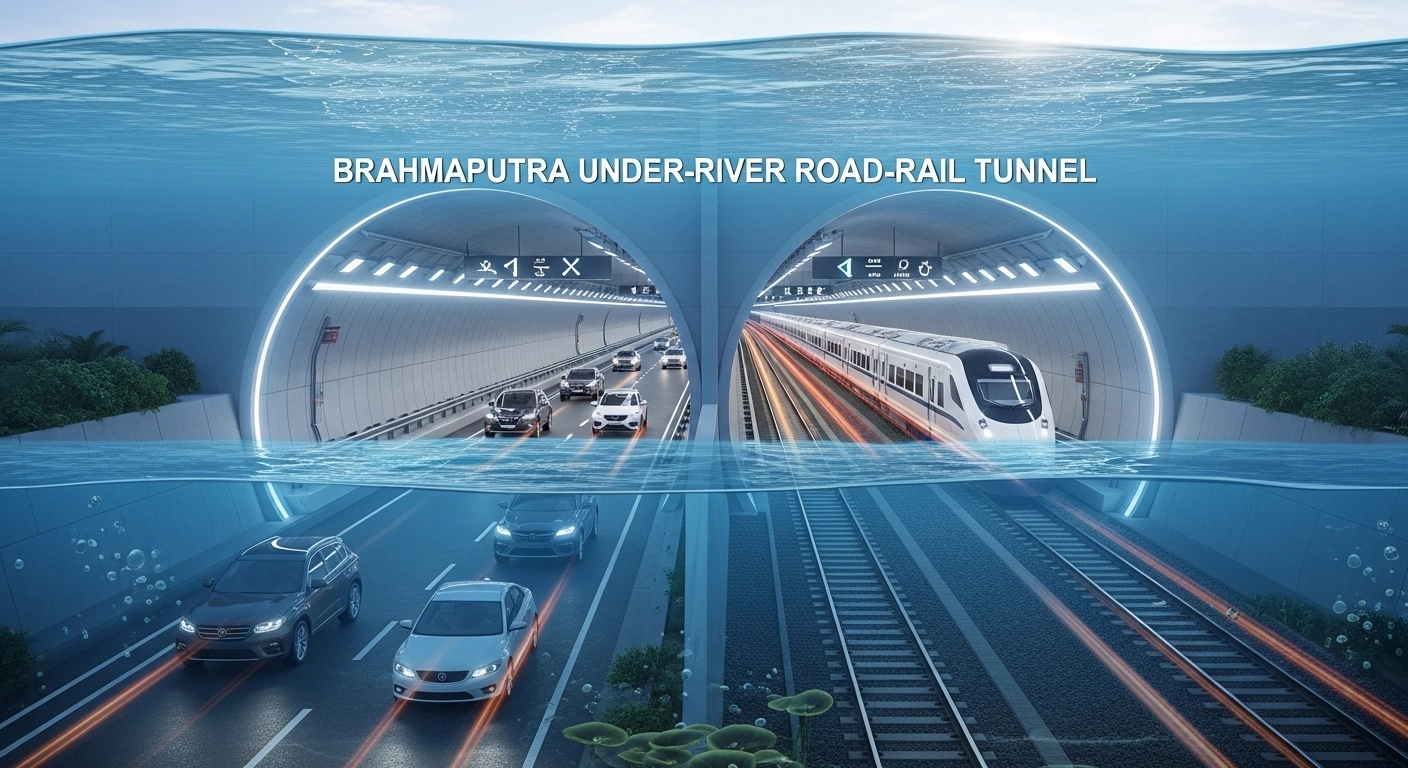
In a historic infrastructure move, the Union Cabinet has approved the Brahmaputra Under-River Road-Rail Tunnel Project in Assam. The ambitious project will become India’s first underwater multimodal tunnel, integrating both road and rail connectivity beneath the mighty Brahmaputra River.
The approval marks a major milestone in India’s infrastructure modernization strategy, especially for the Northeast region, which has long required stronger transport integration and strategic connectivity.
What Is the Brahmaputra Under-River Road-Rail Tunnel?
The project involves constructing a state-of-the-art tunnel beneath the Brahmaputra River that will carry:
- A road corridor for vehicular traffic
- A railway line for passenger and freight movement
Unlike conventional bridges, this underwater tunnel will operate below the riverbed, ensuring uninterrupted movement even during floods or extreme weather conditions.
This makes it India’s first true underwater multimodal transport tunnel, placing the country among a select group of nations with similar advanced infrastructure systems.
Why This Project Is Significant
1. Boost to Northeast Connectivity
Assam serves as the gateway to Northeast India. However, river crossings across the Brahmaputra often face congestion and seasonal challenges. The new tunnel will:
- Reduce travel time between key regions
- Ease traffic load on existing bridges
- Improve year-round connectivity
Enhanced transport efficiency is expected to significantly strengthen economic integration within the region.
2. Strategic and Security Importance
The Northeast region shares international borders and holds strategic importance. The road-rail tunnel will improve logistical movement and emergency response capabilities, enhancing national security preparedness.
3. Economic Development and Trade Growth
Improved infrastructure often triggers economic expansion. The Brahmaputra tunnel is expected to:
- Facilitate smoother freight transport
- Lower logistics costs
- Encourage industrial investments
- Support tourism growth
Better connectivity will open up markets, especially for local agricultural and industrial products.
Engineering and Technological Advancements
Constructing an underwater tunnel beneath one of India’s widest and most powerful rivers presents significant engineering challenges.
Key technical highlights are expected to include:
- Advanced tunnel boring machinery (TBM)
- Seismic-resilient structural design
- Flood-resistant construction techniques
- High-level ventilation and safety systems
The project demonstrates India’s growing capability in executing complex infrastructure developments comparable to global standards.
Environmental and Safety Considerations
Large-scale river projects require careful ecological planning. Authorities are expected to incorporate:
- Environmental impact assessments
- River flow management systems
- Biodiversity protection measures
- Advanced drainage and flood monitoring mechanisms
Sustainability and safety are likely to remain central priorities throughout construction and operation phases.
Impact on Local Communities
For residents of Assam and nearby regions, the tunnel will mean:
- Faster daily commutes
- Improved access to healthcare and education
- Increased employment opportunities during construction
- Long-term economic growth prospects
Infrastructure upgrades often lead to urban development, real estate growth, and expansion of commercial hubs.
Transforming India’s Infrastructure Landscape
The Brahmaputra under-river tunnel reflects India’s broader push toward:
- Multimodal transport networks
- High-tech engineering projects
- Regional economic balance
- Stronger national connectivity
With increasing investment in highways, railways, airports, and waterways, the project fits into the larger vision of building world-class infrastructure across the country.
What Happens Next?
Following Cabinet approval, the project will move into detailed planning, tendering, and construction phases. Timelines will depend on engineering assessments, environmental clearances, and technical execution planning.
Given the complexity of underwater construction, phased development and strict monitoring are expected.
Conclusion
The approval of the Brahmaputra Under-River Road-Rail Tunnel Project represents a transformative step for Assam and the entire Northeast region. As India’s first underwater multimodal tunnel, it signals a new era in infrastructure innovation.
By improving connectivity, enhancing strategic mobility, and driving economic growth, the project has the potential to reshape transportation dynamics in eastern India for decades to come.