
Introduction
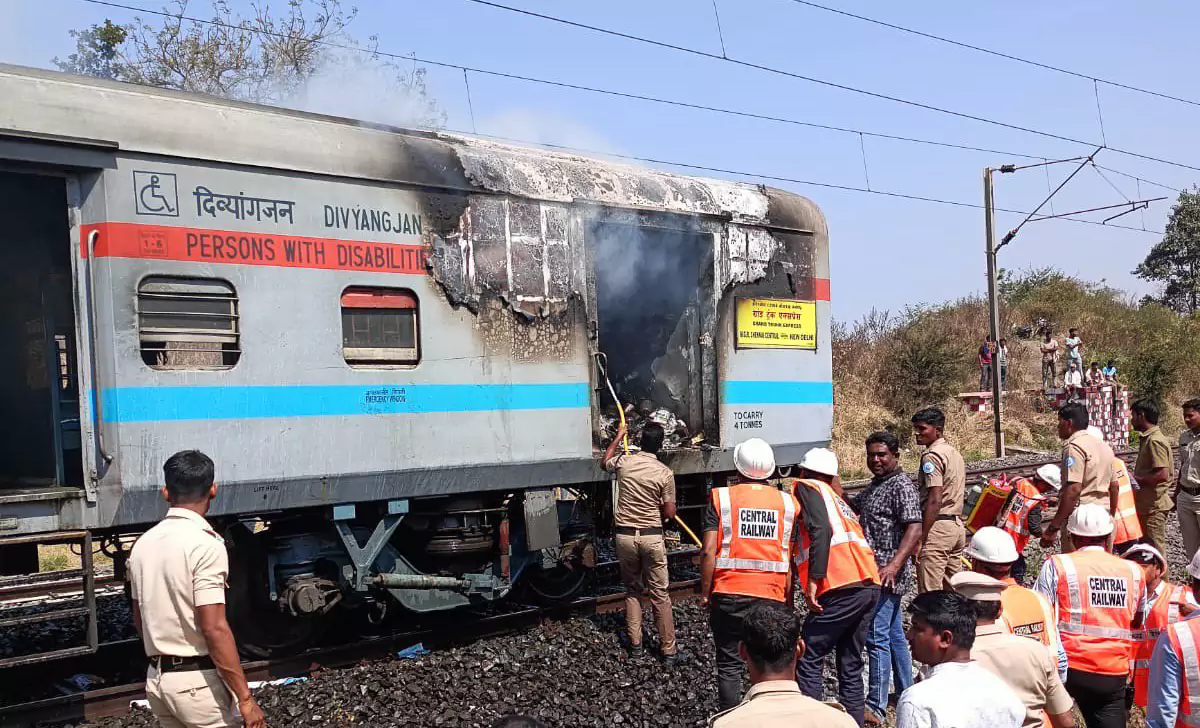
A major railway incident was reported on the busy Nagpur–Wardha rail corridor in Maharashtra after a coach of the New Delhi–Chennai GT Express caught fire during its journey. The quick action of railway officials and emergency teams prevented what could have turned into a tragic accident. Fortunately, no casualties were reported.
This incident has once again raised questions about railway safety mechanisms, emergency response systems, and preventive maintenance protocols across Indian Railways.
What Exactly Happened?
According to railway sources, the fire broke out in the rear section of the train while it was moving between Nagpur and Wardha district. The smoke was first noticed coming from the SLR (Seating-cum-Luggage Rake) coach.
The train was immediately halted near the affected stretch, and railway staff swiftly detached the burning coach from the rest of the rake. Fire brigade teams reached the spot and brought the blaze under control.
The incident occurred in the Wardha district region of Maharashtra, which falls under the Central Railway zone and serves as a critical route connecting northern and southern India.
Location Significance: Why the Nagpur–Wardha Route Matters
The rail stretch between Nagpur and Wardha is a crucial railway corridor in central India. It connects major north-south rail traffic and handles both passenger and freight trains daily.
Any disruption on this route can have a ripple effect on multiple long-distance trains operating between Delhi, Chennai, Hyderabad, and Mumbai.
Immediate Response and Damage Control
Railway authorities followed emergency protocol:
- Train was stopped immediately.
- Affected coach was separated from the main rake.
- Power supply was disconnected.
- Fire brigade teams were alerted.
- Passengers were reassured and relocated safely.
The prompt response ensured zero injuries among passengers and crew members.
Possible Causes of the Fire
While the official investigation is still underway, preliminary assessments suggest possible causes such as:
- Electrical short circuit
- Overheating of equipment
- Luggage material ignition
- Mechanical spark in the SLR compartment
Railway officials are conducting a technical inspection to determine the exact cause.
Passenger Safety: How Indian Railways Handles Emergencies
Indian Railways has introduced several safety upgrades in recent years:
- Fire detection and alarm systems
- Fire-retardant materials in coaches
- Onboard fire extinguishers
- Regular safety audits
- Upgraded LHB (Linke Hofmann Busch) coaches
However, incidents like this highlight the importance of continuous monitoring and infrastructure modernization.
Impact on Train Operations
The affected train resumed its journey after the damaged coach was detached. Some temporary delays were reported on the route due to safety checks and track clearance operations.
Other trains operating on the Nagpur–Wardha section were monitored closely, but major cancellations were avoided.
Railway Safety in Focus
Railway fire incidents, though rare, can be dangerous if not handled promptly. Over the past decade, Indian Railways has significantly reduced such occurrences through modernization, electrification, and digital monitoring systems.
Still, experts emphasize:
- Strict inspection of luggage compartments
- Regular wiring audits
- Passenger awareness about carrying inflammable materials
- Faster emergency communication systems
Public Reaction and Social Media Response
As news of the fire spread, social media platforms saw an influx of videos and posts from passengers. Many praised the railway staff for their quick response and calm handling of the situation.
Local authorities in the Nagpur region also confirmed that all passengers were safe and no panic situation escalated.
Conclusion
The fire incident on the New Delhi–Chennai GT Express near the Nagpur–Wardha route serves as a reminder of the importance of preparedness and rapid emergency response in railway operations. Thanks to swift action, a potential disaster was avoided.
Railway authorities continue their investigation, and further updates are expected once technical findings are released.